Temple of Luxor

Introduction
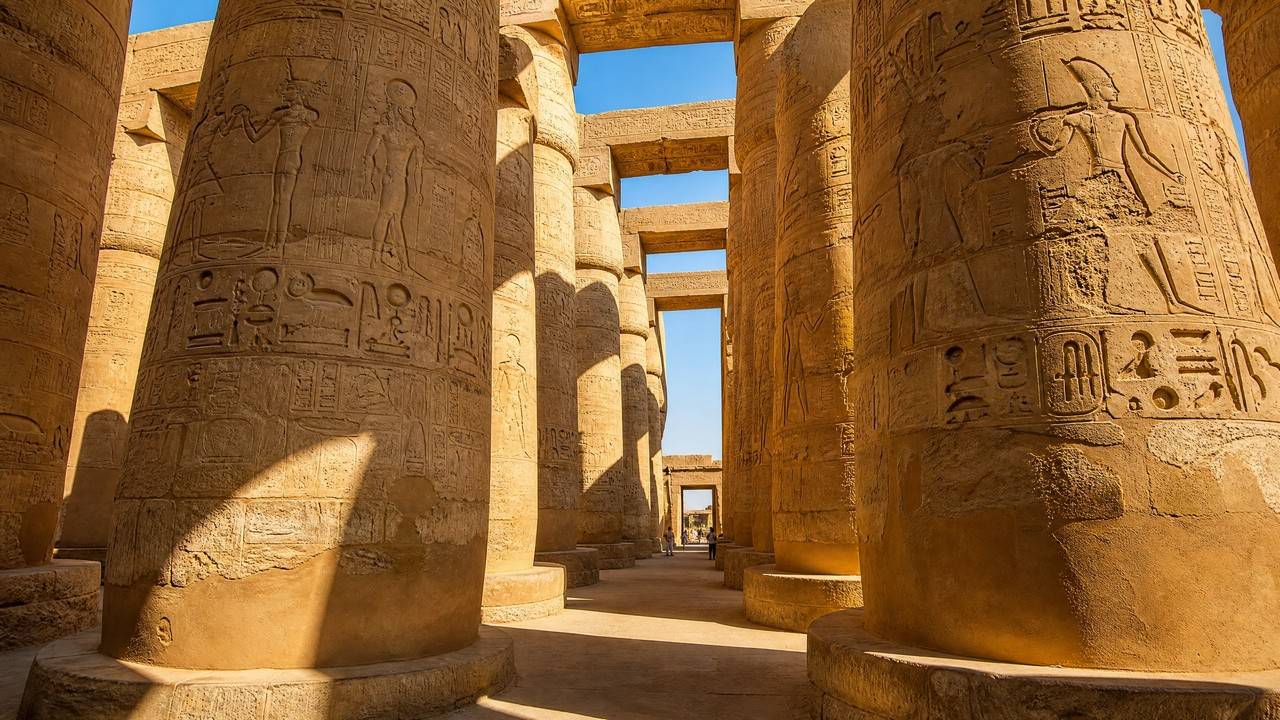
Luxor Temple is a magnificent ancient Egyptian temple in the heart of Luxor. Echoing Karnak, with its great pylon, colossal pharaoh statues, towering obelisk and elegant columns, it is a key Luxor sight—especially dazzling when lit at night. Built in the New Kingdom and mainly dedicated to the sun god Amun (and his family), it was linked to Karnak by the Avenue of Sphinxes—a several-kilometer road lined with hundreds of sphinxes (used for religious processions). Though smaller than Karnak, it is still grand and beautiful: at the entrance stands a great pylon, before it two colossal seated statues of Ramesses II and a tall, finely carved pink-granite obelisk (originally a pair; the other now stands in the Place de la Concorde in Paris). Beyond the pylon are courts, elegant columned halls, more statues, reliefs and chambers. A corner also preserves later (Roman and Islamic) layers, including a mosque—a record of layered history. Most enchanting, it sits downtown and stays open at night: when lit, the pylon, colossi and obelisk glow majestic and mysterious. Visiting Luxor Temple—its pylon, colossi and obelisk, especially at night—is not to be missed.
✨ Highlights
🛈 Practical Info
💡 Tips
FAQ
Any practical tips for visiting Temple of Luxor?
At night the lit pylon and colossi are majestic and mysterious—don't miss it. Don't miss the tall pink-granite obelisk (its twin is in Paris's Place de la Concorde).