Valley of the Kings

Quick Facts
- Location
- Egypt, Luxor
- Category
- Historic Ruins & Heritage
- Duration
- 2-3 hours for standard tombs; 3-4 hours if you add Seti I or Tutankhamun
- Opening Hours
- Open daily from 6:00; last entry 17:00 in summer, 16:00 in winter and Ramadan. Individual tombs rotate in and out for conservation.
- Ticket Price
- Base ticket about EGP 750 including three standard tombs (students EGP 375); Tutankhamun KV62 about EGP 700 extra, Seti I KV17 about EGP 2,000 extra.
- Address
- Wadi al-Muluk, Kings Valley Road, Luxor West Bank, Luxor Governorate, Egypt
- Coordinates
- 25.7402, 32.6011
Introduction
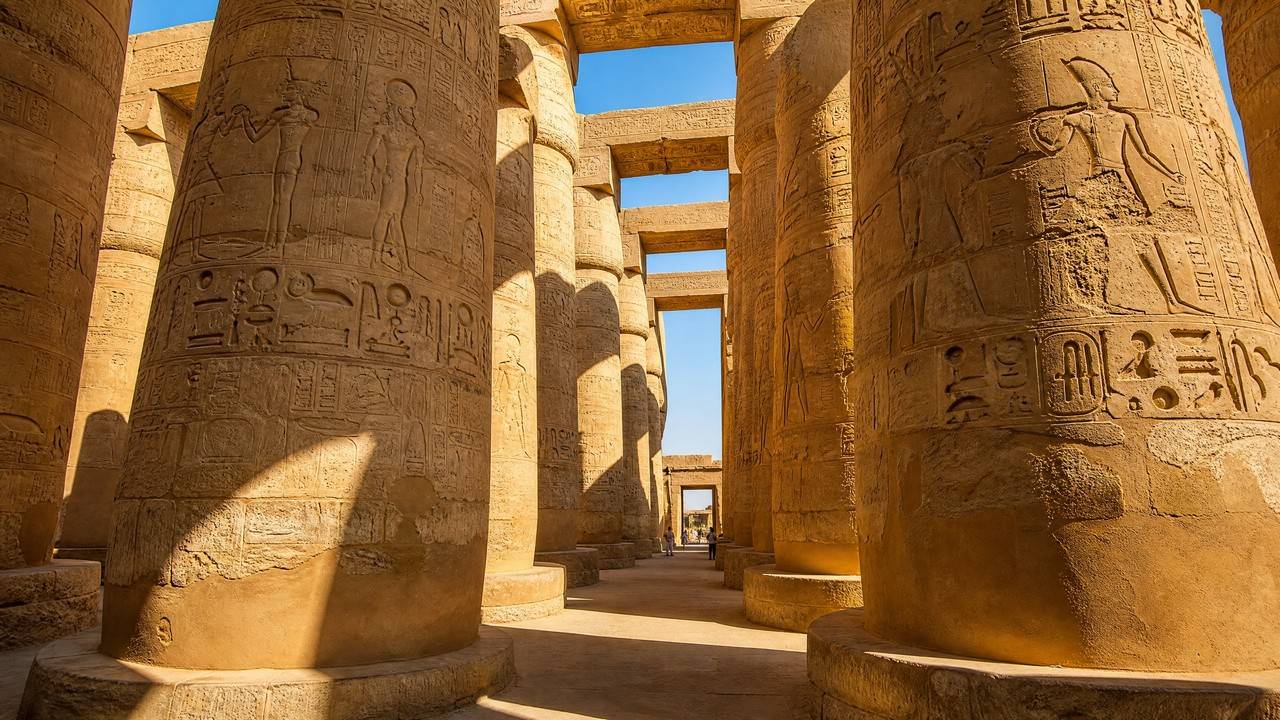
The Valley of the Kings is a limestone basin on Luxor's west bank where most New Kingdom pharaohs were buried, beginning with Tutmosis I in the Eighteenth Dynasty. More than sixty tombs are known, numbered from KV1 onwards; some were looted in the nineteenth century and are now empty, and roughly a dozen are arranged for visitors at any time. The approach is part of the experience: an electric shuttle carries you from the ticket gate up the valley between wind-cut white cliffs, then you walk on sand with the sound of the town left behind, descend ramps and wooden walkways, and step into a cool, still interior that feels like another season. The painted chambers use mineral pigments and remain remarkably vivid after three millennia, covering funerary beliefs: hunting, feasting, battle, harvest and astronomical star maps. There is a clear logic to choosing tombs. The base ticket covers three standard tombs; Ramesses III (KV11) and Ramesses IX (KV6) are reliably colourful and spacious, which makes them ideal on a first visit, and Merenptah (KV8) and Thutmose III (KV34, reached by a set of cliff stairs when open) are also strong. Ramesses V and VI (KV9) costs a modest supplement and its deep blue and gold astronomical ceiling runs the length of the passage, making it the best value in the valley. Seti I (KV17) has the finest painting anywhere here but costs about EGP 2,000. Tutankhamun's tomb (KV62) is small and plain, since the treasures have all moved to the Grand Egyptian Museum in Giza and only the quartzite sarcophagus and mummy remain — whether that name alone justifies the extra ticket depends on how you feel about it.
✨ Highlights
🛈 Practical Info
💡 Tips
FAQ
What are the opening hours of Valley of the Kings?
Open daily from 6:00; last entry 17:00 in summer, 16:00 in winter and Ramadan. Individual tombs rotate in and out for conservation.
How much is the admission for Valley of the Kings?
Base ticket about EGP 750 including three standard tombs (students EGP 375); Tutankhamun KV62 about EGP 700 extra, Seti I KV17 about EGP 2,000 extra.
Any practical tips for visiting Valley of the Kings?
The basin is bare white limestone with no shade; from May to September midday feels over 42 C, so go early. Your ticket covers three tombs: pick from the day's open list, do the quiet ones first and return to the famous ones later.
How long should I spend at Valley of the Kings?
A typical visit takes 2-3 hours for standard tombs; 3-4 hours if you add Seti I or Tutankhamun.