📍 Destination Overview
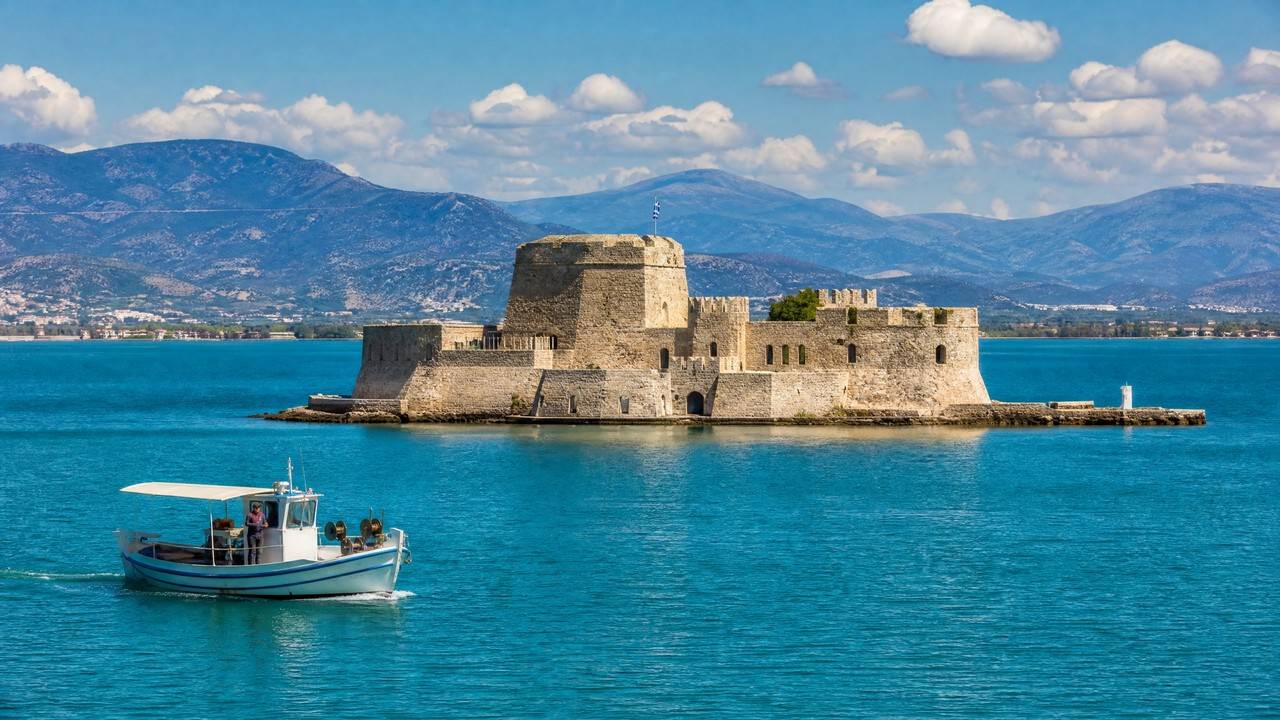
Nafplio sits on the Argolic Gulf of the Peloponnese peninsula and was Greece's first capital after independence, hailed as one of Greece's most elegant cities. The Palamidi Venetian fortress atop the hill requires climbing nearly a thousand stone steps, overlooking the whole town and bay; the Bourtzi water castle in the middle of the gulf appears to float on the blue water. Neoclassical old-town lanes are paved with flagstones, where bougainvillea and cafés exude Mediterranean leisure. It is also the gateway to the Mycenae ruins and the ancient theatre of Epidaurus, where history and elegance meet.
🏰 Location
Greece · Peloponnese · an old city on the Argolic Gulf
🗓️ Best Season
Apr-Jun / Sep-Oct
🕐 Time Difference
−5 to −6 hrs vs Beijing
💰 Currency / Language
Euro EUR / Greek
🕐 Suggested Duration
1-2 days · old town + castle + nearby ruins
🔌 Outlet / Voltage
Type C / F sockets · 230V · adapter needed
☀️ Best Time to Visit & Climate
🌸 Apr–Jun, Sep–Oct
Pleasant weather for old town and ancient-site walks.
🔥 Jul–Aug
The Peloponnese interior is hot.
Jan
🌤️
14°/6°
Feb
🌤️
15°/6°
Mar
🌤️
17°/8°
Apr
🌷
21°/11°
Best
May
🌷
26°/15°
Best
Jun
☀️
31°/19°
Best
Jul
🔥
33°/22°
Aug
🔥
33°/22°
Sep
🌤️
29°/18°
Best
Oct
🍂
24°/14°
Best
Nov
🌥️
19°/11°
Dec
🌤️
15°/8°
📷 Top Attractions

🎯 Nafplio Experiences
Climb Palamidi
Top the stone steps for a view over the gulf.
Old-town stroll
Neoclassical lanes and coffee.
Mycenae Ruins
The ancient civilization of the Lion Gate.
Ancient theatre
The perfect acoustics of Epidaurus.
Gulf sunset
Dusk at the Bourtzi castle.
Spring (Apr–Jun) and autumn (Sep–Oct) are best. In Jul–Aug the inland is hot, so climb Palamidi in the early morning or evening. In summer Epidaurus hosts a classical drama festival. Often visited as a day trip from Athens or on a Peloponnese tour.
🚌 Transport & Stays
City Transport
🚗Long-distance bus depends on schedule (reference)
Car rental / Bus
About 2 hrs from Athens by car
Long-distance bus depends on schedule (reference)
🦶—
Walking
Compact old town, great on foot
—
⛵Depends on route (reference)
Small-boat cruise
To the Bourtzi water castle
Depends on route (reference)
🚌Depends on route (reference)
KTEL Long-distance Bus
Connects Athens with nearby ruins
Depends on route (reference)
Recommended Stay Areas
🏘️ Inside the old town (top pick)
Flagstone lanes, walkable sights
🌊 Seafront promenade
Gulf views and cafés
🏰 Below the castle
Close to the castle steps
🏖️ Around Arvanitia Beach
Resort stays near the beach
Free Consultation
Want to plan your Nafplio trip in more depth?
Tell us your departure city, travel dates and interests, and Usitour will tailor a trip just for you.