

Bio Centro Iguazú is located in Puerto Iguazu, Argentina. It is a small science park that houses and rescues wild animals. It is suitable for half-day tours outside of the waterfall itinerary for families and children. This guide summarizes tickets, opening hours and travel methods, and covers Iguazu National Park transportation, accommodation zones, 3 - 7-day itineraries, food and tips. Prices are marked in three currencies based on the September 2026 exchange rate, and the information indicate
At the tri-border area where Argentina, Brazil, and Paraguay meet, Iguazu Falls is world-famous for its 275 cascades. Most visitors head straight to the falls, yet easily miss a relaxing eco-friendly supplementary stop—Bio Centro Iguazú. This guide centers on this small wildlife rescue park, covering transportation, accommodation, itineraries, and dining in Puerto Iguazú. Prices are converted at the platform exchange rate as of September 15, 2026 (1 USD ≈ 1,510.32 ARS ≈ 6.73 CNY).
What Kind of Destination Is Bio Centro Iguazú? Who Is It For, and When to Visit?
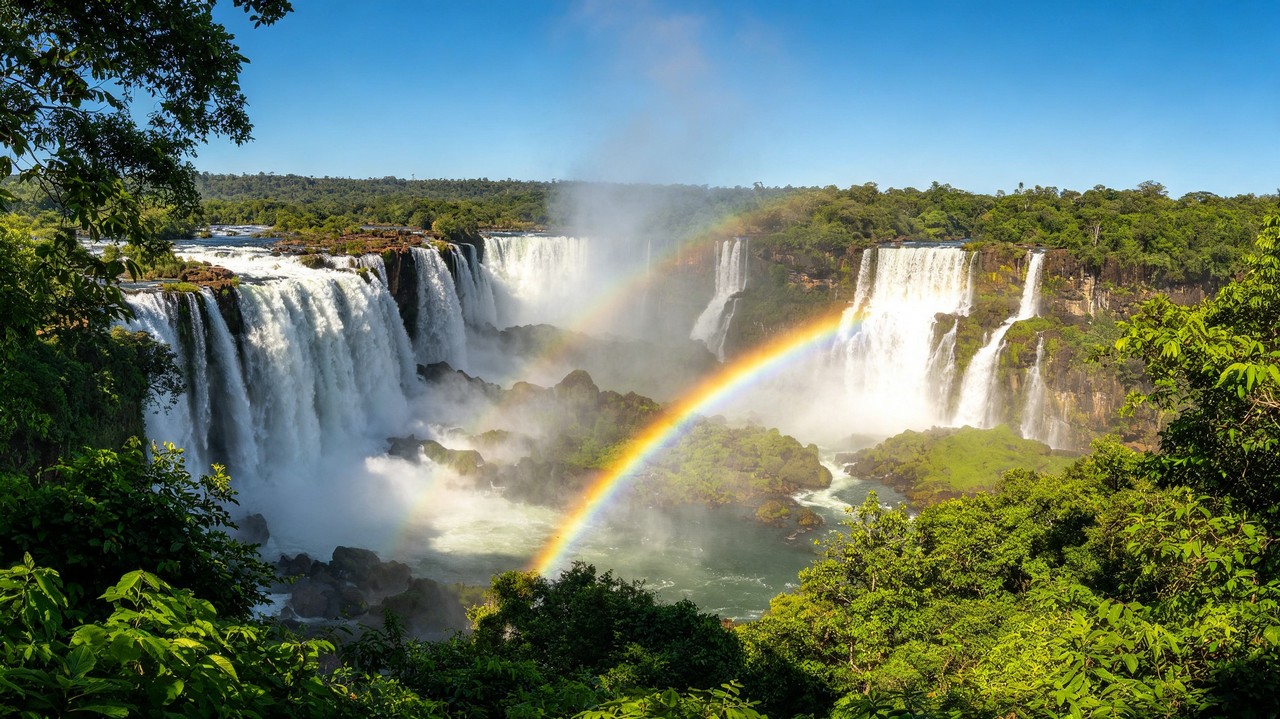 Argentina-Iguazu
Bio Centro Iguazú is a small wildlife rescue and exhibition center near downtown Puerto Iguazú that houses locally rescued birds, reptiles, and mammals, and also serves an educational purpose. based on official public sources in 2026, the Usitrips platform editors' verdict is: it is positioned as a lightweight option "beyond the falls"—the park is small in scale, half a day is enough, and it is ideal for travelers who want to observe rainforest species up close without squeezing into crowds for yet another day.
Who it suits: Families with children (feeding and guided-session times require advance inquiry), travelers on tight schedules, and eco-minded visitors who prefer quiet animal observation.
Location and size: The park is located in the southeastern outskirts of Puerto Iguazú, along the road leading to Iguazu National Park—about 500 meters in a straight line from the national park entrance, roughly 15 kilometers from downtown, and about a 20-minute taxi ride away.
Best time to visit: Accessible year-round. Weighing climate and visitor flow, April–May and September–October are the best, with temperatures of 20–28°C and less rainfall; December–February is the Southern Hemisphere summer—hot and rainy (30–35°C)—but with the greatest water volume at the falls; June–August is cool and dry. The Argentine side of Iguazu National Park was inscribed on the UNESCO World Heritage List in 1984 (as of September 2026; source: official website of Argentina's National Tourism Office).
Regarding visas: US passport holders may stay visa-free for 90 days; Chinese travelers need to apply for a visa in advance, and those holding a valid US visa can apply for the AVE electronic travel authorization (as of September 2026, subject to Argentina's National Directorate of Migration).
How to Get to Puerto Iguazú? How to Get Around Once There?
How to Fly: Tickets and Flight Segments
The mainstream option is to fly to Buenos Aires and then transfer to a domestic flight. Aerolíneas Argentinas and Flybondi operate multiple daily round trips; AEP/EZE→IGR takes about 1 hour 50 minutes, and one-way tickets booked in advance cost about US$80–150 (≈ARS 120,800–226,500 / CNY 538–1,010) (as of September 2026; source: Aerolíneas Argentinas official website).
Departing from North America: taking New York as an example, a direct flight to Buenos Aires takes about 10.5–11 hours; you can also transfer to South America via Panama City (the Copa Airlines hub) or Mexico City (Aeroméxico). If you plan a two-country trip, another common route is to fly via São Paulo to Foz do Iguaçu, Brazil (IGU), and then cross the border.
By land: the long-distance bus from Buenos Aires to Puerto Iguazú covers about 1,300 kilometers and takes 17–20 hours, with sleeper seats costing about US$60–90 (≈ARS 90,600–135,900 / CNY 404–606)—suitable for travelers with plenty of time.
Airport and City Transportation Comparison
| Mode | Route | Duration | Reference Cost (as of September 2026) |
|---|---|---|---|
| Taxi/remis | IGR Airport→downtown (about 15 km) | about 20–25 minutes | ARS 20,000–30,000 (≈US$13–20 / CNY 89–134) |
| Airport bus | IGR Airport→downtown | about 30 minutes | ARS 5,000–8,000 (≈US$3–5 / CNY 22–36) |
| Public transportation | Downtown↔National Park (about 16 km) | 30–40 minutes | ARS 6,000–10,000 (≈US$4–7 / CNY 27–45) |
| Ride-hailing | Downtown↔Bio Centro Iguazú | about 20 minutes | ARS 8,000–12,000 (≈US$5–8 / CNY 34–54) |
The fares above are based on official public sources by the platform editors and quotes from local operators; actual prices at the site prevail. The prices in the table fluctuate quickly with the peso, so it is recommended to re-verify them in the month of departure.
Which Area Is Most Convenient for Accommodation?
Downtown: The Best Value Choice
Supermarkets, restaurants, and pharmacies are within walking distance, bus stops are concentrated, and both the waterfalls and the eco-park are easy to reach. Hostels and guesthouses cost about US$25–50 per night (≈ARS 37,800–75,500 / CNY 168–337), and mid-range hotels about US$70–140 (≈ARS 105,700–211,400 / CNY 471–942).
Rainforest Resort Belt: Spectacular Views
Located along the highway leading to the national park, these are mostly resort hotels with pools, ideal for honeymoons and family vacations, from US$180–400 per night (≈ARS 271,900–604,100 / CNY 1,211–2,692). On the Argentine side, Meliá Iguazú is the only hotel inside the park; staying there lets you enjoy the park exclusively at off-peak hours, but you should book early for peak season.
Brazilian Side: Foz do Iguaçu — Plenty of Chain Hotels
Chain hotel options are abundant, and prices are often lower than on the Argentine side (about US$50–150 / CNY 337–1,010 per night), but you should allow 1–1.5 hours each day for border crossing and travel time.
| Area | Reference Price/Night | Suitable For |
|---|---|---|
| City Center · Hostels/Guesthouses | US$25–50 (≈ARS 37,800–75,500 / CNY 168–337) | Backpackers, solo travelers |
| City Center · Mid-range Hotels | US$70–140 (≈ARS 105,700–211,400 / CNY 471–942) | Families, trips with kids |
| Rainforest Resort Belt | From US$180–400 (≈ARS 271,900–604,100 / CNY 1,211–2,692) | Vacations, honeymoons |
| Foz do Iguaçu, Brazil | US$50–150 (≈ARS 75,500–226,500 / CNY 337–1,010) | Visiting both sides |
(Prices as of September 2026; sources: platform partner data and official public sources; subject to rates at the time of booking)
What Attractions Are There? What Are the Ticket Prices and Opening Hours?
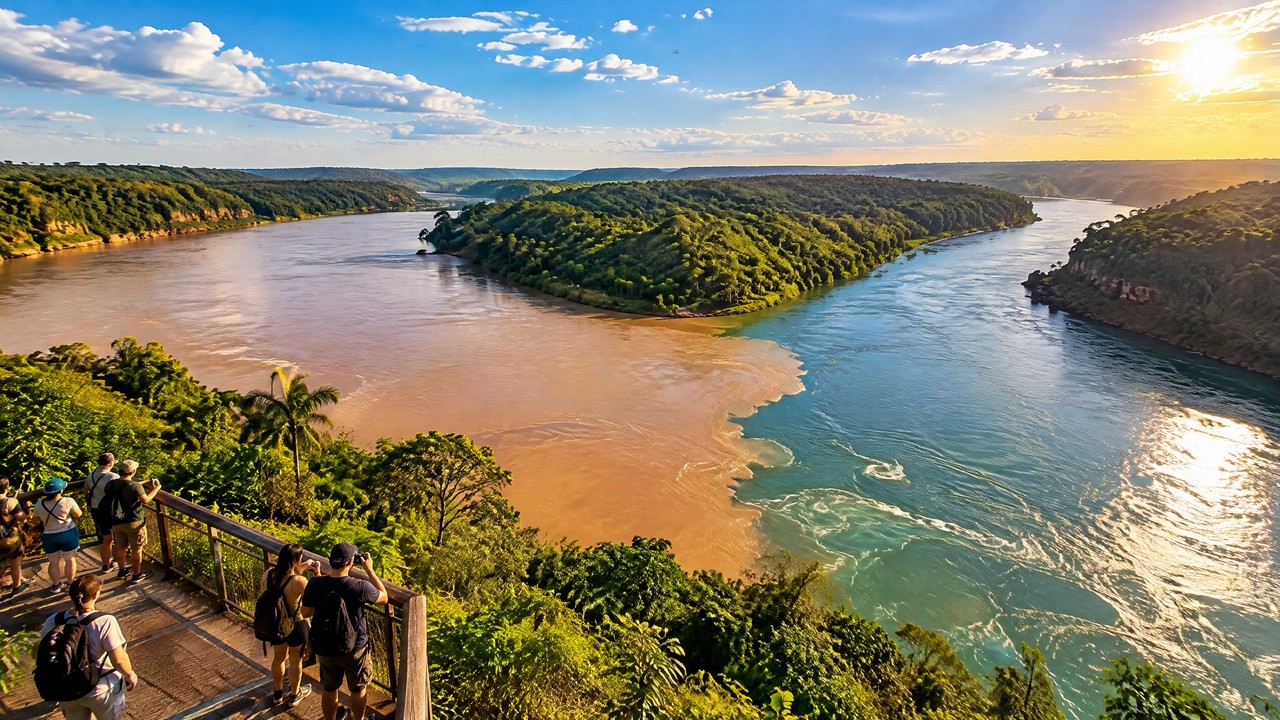 Viewing Three Countries at Once from Puerto Iguazú, Argentina
Iguazú National Park (Misiones Province, Argentina, about 16 km from Puerto Iguazú): 275 cascades pour down from the subtropical rainforest. The walkways are divided into three main routes—the Upper Circuit, Lower Circuit, and Devil's Throat—and the park's ecological train links the various stops. Single-day tickets for foreign visitors cost about ARS 45,000 (≈US$30 / CNY 200), charged per day; opening hours are approximately 8:00–18:00; recommended duration is half a day to 1 day. Tickets can be purchased in advance through official online channels to reduce queuing in peak season (as of September 2026; source: National Parks Administration of Argentina; subject to same-day announcements).
Garganta del Diablo Falls (Devil's Throat) (deep within the national park): Dozens of streams converge into a U-shaped wall of water about 80 meters high that crashes down thunderously. Take the ecological train (included in the ticket) to the terminus, then walk along the roughly 1-km walkway to reach the viewing platform at the heart of the falls. Admission is included in the national park's general ticket; the walkway is open approximately 8:00–17:00; allow about 2 hours for a visit. Double rainbows often appear right after rain clears, and the morning light is the softest.
Iguazú Eco-Park (southeastern outskirts of Puerto Iguazú, near the national park): A small wildlife rescue and environmental education center that shelters rescued birds, reptiles, and mammals. Admission is about ARS 7,500–10,500 (≈US$5–7 / CNY 34–47; reference price, subject to on-site announcements); opening hours are approximately 9:00–17:00 (for reference; recommend confirming by phone before your visit); recommended duration is half a day; check in advance for feeding and guided tour times. The park has many mosquitoes, so bring insect repellent.
Three Borders Landmark (Hito de las Tres Fronteras) (river mouth at the northern end of Puerto Iguazú): The Paraná and Iguazú rivers converge here; the boundary markers and giant flagpoles of Argentina, Brazil, and Paraguay stand in a row, and at night lights in three colors reflect on the river's surface. Free admission; open approximately 9:00–20:00; recommend spending about 1 hour, best at sunset; the riverside food stalls let you sample snacks from all three countries in one visit.
If time permits, the nearby Parque das Aves bird park and the Itaipu Dam on the Brazilian side, which align well with the eco-park's "rescue + education" focus, can be added as a cross-border day trip.
How to Plan 3-Day, 5-Day, and 7-Day Itineraries?
3-Day Option: Waterfall Highlights + Light Eco Experience
- D1: Iguazú National Park (Upper Circuit → Lower Circuit → Devil's Throat Train Line); for lunch in the park, it's advisable to bring some snacks
- D2: Morning at the Iguazú Eco Park (3–4 hours including guided tour) → afternoon rest at the hotel → sunset at the Three Borders Landmark in the evening
- D3: Half day at the Brazilian side falls (visa arranged in advance) or shopping at city markets → departure
5-Day Plan: Adding Cross-Border and Nearby Attractions
- D1–D2: Same as the 3-day plan
- D3: Brazilian side falls + Parque das Aves bird park
- D4: Minas de Wanda amethyst mines (about 50 km south of the city) + souvenir shopping in the city
- D5: Flexible day or departure
7-Day Plan: Extending to Misiones Province
- D1–D4: Same as the 5-day plan
- D5: Charter a car or take a bus to the San Ignacio Jesuit Mission ruins (inscribed on the UNESCO World Heritage List in 1984; about 230 km one way, roughly a 3-hour drive), overnight locally
- D6: Return to Puerto Iguazú, relax by the riverside + tri-color light night show
- D7: Departure
On rainy days, you can swap the eco park day with the falls day; during the rainy season, when water volume is high, some walkways may be temporarily closed—check official announcements before your trip. Transfers, cross-border charters, and Chinese-speaking guides can be booked in advance through USITrip to reduce on-site bargaining costs.
What to Eat in Puerto Iguazú? How to Avoid Pitfalls?
Local Specialties
- Asado (barbecue): A national-dish-level Argentine experience, about US$12–25 per person (≈ARS 18,100–37,800 / CNY 81–168)
- Surubí river fish: A freshwater fish specialty of the Paraná River, typically prepared grilled on an iron plate or baked in cream; main courses around US$10–18 (≈ARS 15,100–27,200 / CNY 67–121)
- Empanada: The beef-filled version is classic, about US$2–3 each (≈ARS 3,000–4,500 / CNY 13–20), available everywhere
- Chipa: A cassava bread originating from Guaraní culture, about US$1–2 each (≈ARS 1,500–3,000 / CNY 7–14)
- Tereré (cold-brewed mate): A summer staple in Misiones Province; tea house experience around US$3–5 (≈ARS 4,500–7,500 / CNY 20–34)
Pitfall Avoidance Guide
- Be cautious of restaurants touting for customers within 200 meters of the long-distance bus station; choose places with clearly priced menus and many local customers
- Some restaurants charge a "cubierto" (table fee) of about ARS 3,000–6,000 per person (≈US$2–4 / CNY 13–27); confirm before sitting down
- For card payments, the exchange rate is set by your card issuer; check the receipt for large bills; after payment, verify there are no duplicate charges
- Politely decline all approaches near the border marker offering "guidance" or "favorable currency exchange"
Practical Tips: Safety, Language, Payment, and Communication
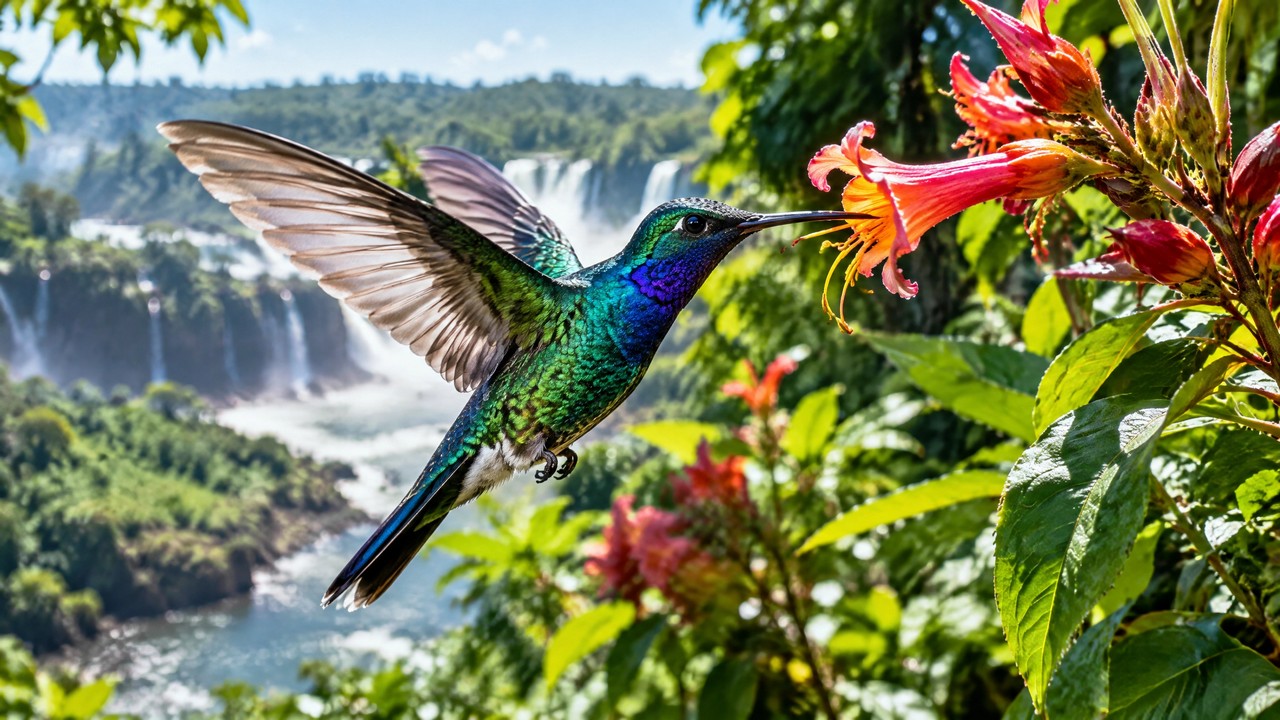 Hummingbird Garden in Puerto Iguazú, Argentina
Safety
Puerto Iguazú is a relatively safe town by Argentine standards, but standard precautions are still necessary: avoid walking alone on riverside boardwalks at night, and keep an eye on your belongings on trains and at stations. Coatis in the park will snatch food and bite—do not feed them and keep food secured; the falls walkways are slippery, so wear non-slip shoes.
Language
Spanish is the main language; due to proximity to Brazil, Portuguese is also common; basic English works. Useful phrases: Hola (hello), Gracias (thank you), ¿Cuánto cuesta? (how much?), Baño (restroom).
Payment and Currency Exchange
Keep small denominations of pesos in cash; Visa/Mastercard are widely accepted at hotels and restaurants. ATM per-transaction limits are low (commonly around ARS 200,000 ≈ US$132 / CNY 892), and fees are about US$6–10 per transaction. Exchange money at banks or licensed exchange offices (casa de cambio); never trade with street money changers. As of September 2026, the gap between official and market exchange rates has narrowed significantly (source: platform exchange rate data). Tipping convention is about 10% of the bill.
Communication and Internet
Prepaid SIM cards from Personal, Claro, and Movistar are available at the airport and city stores; international eSIM plans that support Argentina can be activated before departure; WiFi is basically ubiquitous at hotels and restaurants.
Health Protection
Dengue fever is a year-round risk, with higher incidence in the rainy season: long sleeves and pants plus DEET-based insect repellent are essential, and take extra care against mosquitoes in densely vegetated areas like the eco park. Sun protection and hydration are equally important; for the yellow fever vaccine, consult a travel medicine clinic 4–6 weeks before departure (see FAQ for details).
Frequently Asked Questions FAQ
Q: Are the Iguazú Eco Park and Iguazú National Park the same place?
A: No. The Iguazú Eco Park is a wildlife rescue and exhibition center near Puerto Iguazú, with tickets costing about ARS 7,500–10,500 (≈US$5–7 / CNY 34–47), and it can be toured in half a day; Iguazú National Park, on the other hand, is home to the 275 waterfalls, with a single-day ticket for foreign visitors costing about ARS 45,000 (≈US$30 / CNY 200), and a full day is recommended. The two serve complementary purposes, so it is best to schedule them at different times.
Q: If I can only choose one side of the falls, the Argentine side or the Brazilian side, how should I choose?
A: Choose the Argentine side for immersion — the boardwalks run right along the water, and the Devil's Throat viewing platform takes you straight to the heart of the falls; choose the Brazilian side for panoramic views — you can take in the entire waterfall complex at a glance and view the Devil's Throat up close from the front. If time permits, it is best to devote a full day to each side; Chinese and US citizens need to obtain a Brazil e-visa in advance (as of September 2026, subject to information from official Brazilian channels).
Q: Do I need a yellow fever vaccination?
A: Argentina does not require the yellow fever vaccine by law, but Misiones Province is a rainforest region, and health authorities in many countries recommend vaccination. Consult a travel medicine clinic 4–6 weeks before departure. The greater health risk during the trip is mosquito-borne dengue fever, so do not skip mosquito repellent measures.
Q: Can the falls and the Eco Park be arranged on the same day?
A: Not recommended. The standard route (Upper Circuit + Lower Circuit + Devil's Throat) takes 6–8 hours; the feeding sessions and guided tours at the Eco Park are also worth experiencing at a leisurely pace, so scheduling it for the next morning makes more sense. If you have a flight departing that evening, you can compress the Eco Park into a 1.5–2 hour quick visit, but you will miss the guided tour.
Q: What is a suitable budget for this trip?
A: A 3-day itinerary (excluding international flights) costs about US$350–800 (≈ARS 528,600–1,208,300 / CNY 2,356–5,384): budget travelers staying in hostels, taking public transit, and eating simple meals can keep it to US$120/day; with a rainforest resort hotel and private car service, it exceeds US$250/day. Prices in Argentina fluctuate quickly, so please recheck at the current month's exchange rate before departure.
Practical Resources
I. Reference Materials (Summary of Official Source Links)
- Administración de Parques Nacionales (Argentina's National Parks Administration) — Iguazú National Park operations, tickets, and trail status
- Iguazú Argentina Official Website — official destination information for the Argentine side
- Dirección Nacional de Migraciones (Argentina's National Directorate of Migration) — visas, AVE e-visa, and entry policies
- Aerolíneas Argentinas — flight schedules and fares
- Argentina National Tourism Official Website — official destination guide
II. USITrip
Founded in 2004, USITrip has long provided itinerary consultation, local tour booking, and transfer reservation services for travelers to South America. If you need a Chinese-speaking guide in Puerto Iguazú, cross-border private car service, or flight fare comparison, visit the official website at https://www.usitrip.com/ or call the China hotline 400-998-8038 for one-on-one assistance.
Recommended Products
No recommended products


More Popular Experiences
No recommended products
